Environment & Nature
Environment & nature is dedicated to building sustainable dairy value chains. IDF drives progress by advancing environmental standards and validating practical solutions that help the sector adapt to climate change. The ultimate goal is to minimize environmental impact while safeguarding productivity and long-term viability.
Environmentally friendly diets need to be healthy. Providing a growing world population with more sustainable and healthy food is a big challenge for the future. In seeking solutions to how we can best develop sustainable food systems it must be remembered that it takes more than adequate calories to feed humans. The dairy sector has been pioneering on the challenge to reduce environmental impact and protect nature, setting ambitious targets of GHG reduction, committing to further reductions and significant investment in research and development to find innovative and sustainable ways to produce and process nutritious milk and dairy products.
The result has been improvements in environmental performance, producing more nutritious milk and dairy products with fewer natural resources, less water, and less energy. Â In 2013, the global dairy sector launched the Dairy Sustainability Framework to enable the industry to continuously improve and demonstrate adaptation and mitigation progress made through proactive efforts. In 2015, the dairy sector was the first one to develop a life cycle assessment methodology to measure its footprint. In 2016, the International Dairy Federation and FAO signed the Dairy Declaration of Rotterdam, a commitment by the global dairy sector to the achievement of the UN sustainable development goals.
The sector is continually finding new ways to improve sustainability, increase energy efficiencies, reduce greenhouse gas emissions, reduce water, save energy, and lower operating costs for dairy farms.
Dairy as part of the solution
- Energy efficiency and GHG emissions quantification and mitigation, including renewable energy generation
- Water quality, efficiency and reuse​
- Biodiversity
- Waste management and reduction
- Review and adoption/promotion of best available technologies and practice
- The dairy sector has one of the smallest carbon footprints per unit of animal product in the world. Producing milk and indirectly meat, accounts for 4% percent of all global greenhouse gas (GHG) emissions from human activities.
- Overall contribution of milk production, processing and transportation represents 2.7% of GHG global emissions.
- The dairy sector is significantly reducing emissions: emission intensity of milk has dropped by almost 11% between 2005 and 2015, while dairy production increased by 30% (FAO report 2019).
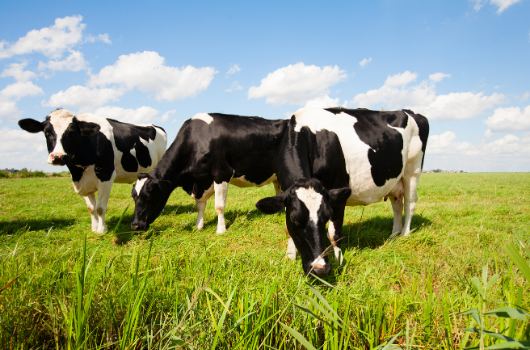
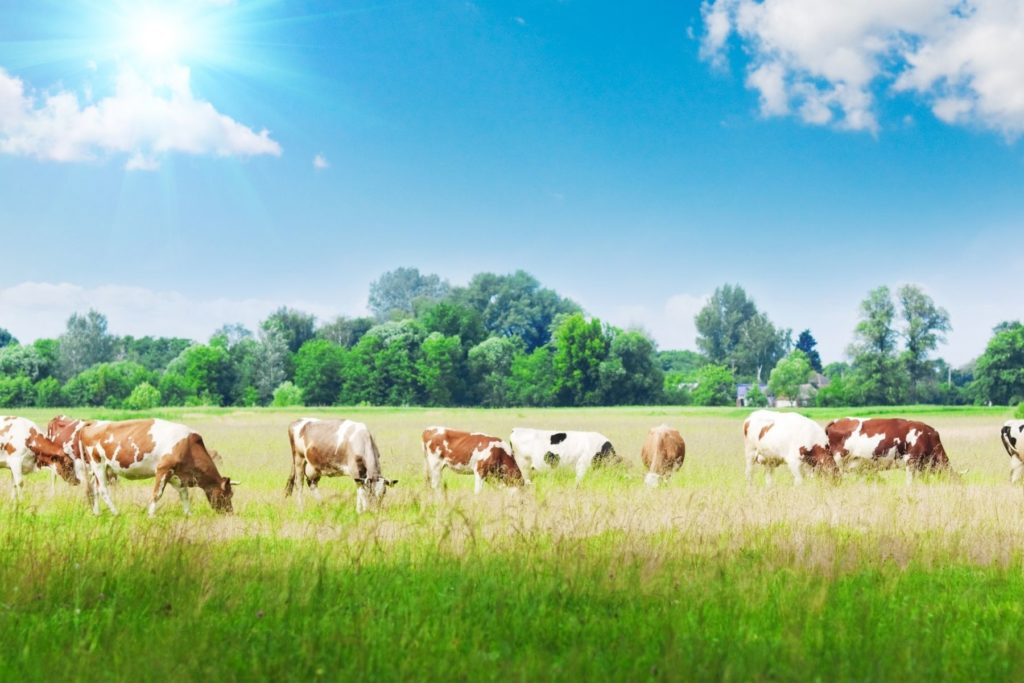
- Ruminants use agricultural land and environmental resources efficiently. Around 1.3 billion ha or 1/4 of the global agricultural area is not suitable for cultivated agriculture. While food for humans cannot be grown on these marginal lands, cows and other dairy animals can graze in these areas, recycling otherwise wasted biomass into milk.Â
Share this page

The dairy sector has been pioneering on the challenge to reduce its environmental impact
Learn more about environment
The breadth of issues IDF covers in its work is extensive. Learn more about the work we do.
Life cycle assessment of the dairy sector
Calculating the environment impact of dairy through environmental life cycle assessments​.
Read MoreEcosystem services
Ecosystem services may be defined as the benefits to humans from nature or, direct and indirect contributions of ecosystems to human wellbeing.....
Read MoreInnovative solutions for sustainable dairy processing

Providing a comprehensive overview of eco-friendly & innovative dairy wastewater treatments.
Read MoreLife cycle assessment updates
Calculating the environment impact of dairy through environmental life cycle assessments​.
Read MoreRelated reports & publications
IDF provides a permanent source of authoritative scientific and other information on a whole range of topics relevant to the dairy sector.
Related news & insights
IDF provides a permanent source of authoritative scientific and other information on a whole range of topics relevant to the dairy sector.
New IDF Podcast Episode Explores Methane Mitigation at Farm Level
FIL-IDF has released a new podcast episode exploring methane mitigation at farm level, bringing the discussion beyond global headlines and into....
IDF contributed to ICAR workshop on sensor data for dairy animal health and welfare
FIL-IDF contributed to the ICAR 2026 conference in Verona, Italy, through a joint ICAR–IDF workshop focused on the use of sensor data in dairy....
9th IDF Symposium on Sheep, Goat, Camel & Other Non-Bovine Milk, Early-bird registration extended
Great news! 🎉 We’ve extended early-bird registration for the 9th IDF Symposium on Sheep, Goat, Camel & Other Non-Bovine Milk! 👉 Lock in....

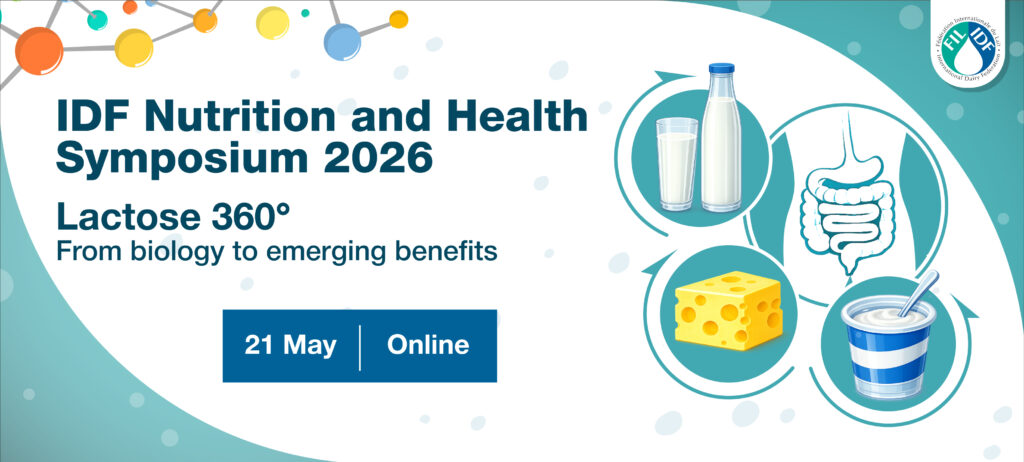
6th IDF Nutrition & Health Symposium explored the role of lactose in human health
The 6th IDF Nutrition & Health Symposium, held online on 21 May 2026, brought together experts from around the world to explore the role of....
IDF launches 2019 World Dairy Situation Report
The 2019 edition of the much-anticipated World Dairy Situation report published by the International Dairy Federation (IDF) was launched today at the....