

Environment & Nature



The dairy sector has been pioneering on the challenge to reduce its environmental impact
Life cycle assessment of the dairy sector
Calculating the environment impact of dairy through environmental life cycle assessments.
Read More
Ecosystem services
Ecosystem services may be defined as the benefits to humans from nature or, direct and indirect contributions of ecosystems to human wellbeing.....
Read More
Innovative solutions for sustainable dairy processing
Providing a comprehensive overview of eco-friendly & innovative dairy wastewater treatments.
Read MoreLife cycle assessment updates
Calculating the environment impact of dairy through environmental life cycle assessments.
Read More
Bulletin of the IDF N° 24/1965 - General report on the IDF Seminar held in Kiel (Fed. Germany) in J...
The following aspects are considered: general survey of bulk collection systems in various countries (12 repor....

Bulletin of the IDF N° 18/1964 - Report of an IDF Seminar on fermented milks, held in Paris (France...
This document contains the text of the 12 reports submitted at this international conference as well as an acc....

ISO 8968-3 | IDF 20-3: 2004 - Milk - Determination of nitrogen content - Part 3: Block-digestion met...
This standard specifies a method for the determination of the nitrogen content of liquid, whole or skimmed mil....

Bulletin of the IDF N° 197/1986 - Demand analysis and policy evaluation...
This Bulletin is entirely devoted to the proceedings of an IDF Workshop, held in Ottawa (Canada) in May 1985.....

Bulletin of the IDF N° 283/1993 - Inhibitory substances in milk - current analytical practice...
By various authors This publication is the result of a seminar related to inhibitory substances held in Lund i....

Bulletin of the IDF N° 9/1962 - General report on the 7th IDF Seminar at Bistad (SE), 4-6 September...
Withdrawn because publication not available.

9th IDF Symposium on Sheep, Goat, Camel & Other Non-Bovine Milk, Early-bird registration extended
Great news! 🎉 We’ve extended early-bird registration for the 9th IDF Symposium on Sheep, Goat, Camel & Other Non-Bovine Milk! 👉 Lock in....

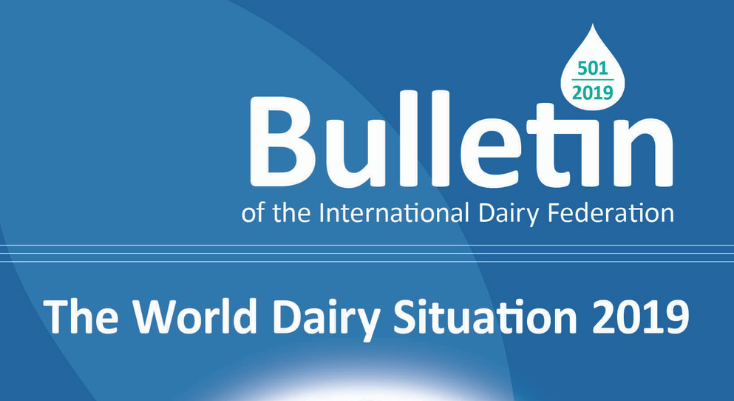
IDF launches 2019 World Dairy Situation Report
The 2019 edition of the much-anticipated World Dairy Situation report published by the International Dairy Federation (IDF) was launched today at the....
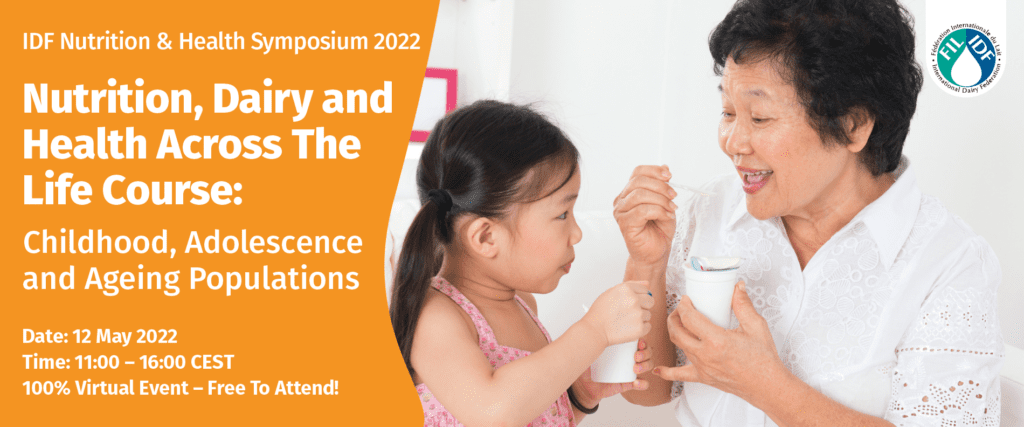
Join the IDF Nutrition and Health Symposium 2022
After hosting a very successful and engaging event last year with over 400 participants, IDF is holding its second annual virtual Nutrition and....
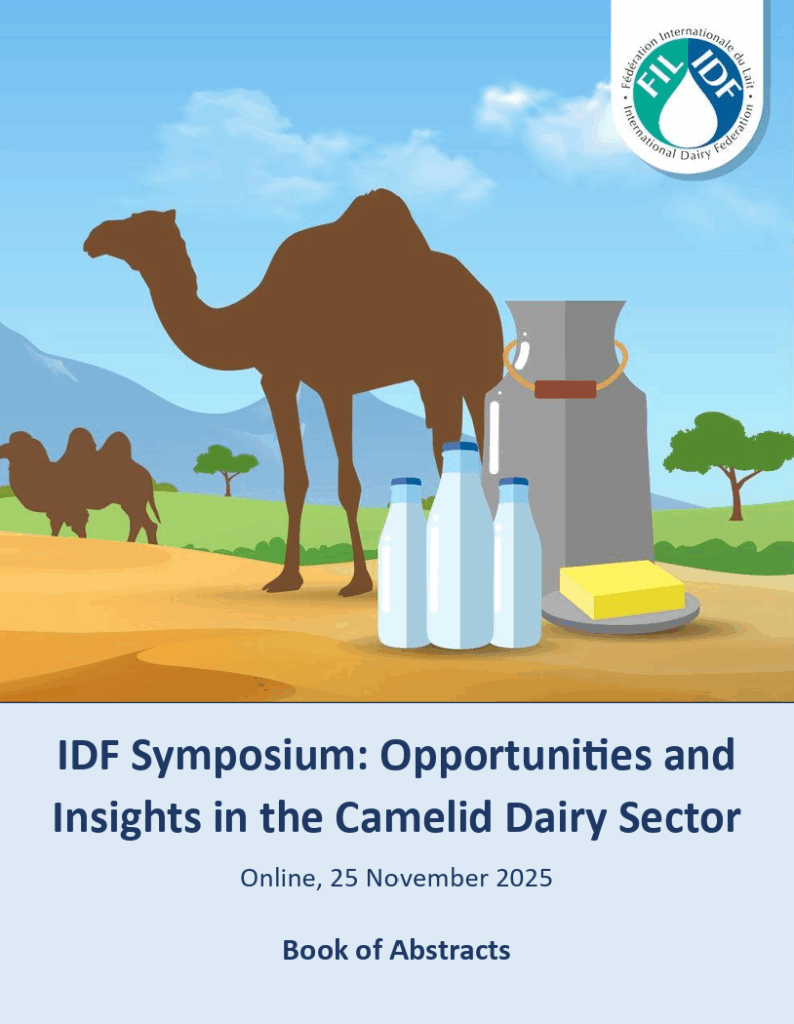
New book of abstracts
Celebrating a Successful IDF Symposium: Opportunities and Insights in the Camelid Dairy Sector! We are thrilled to announce the winner of the Best....
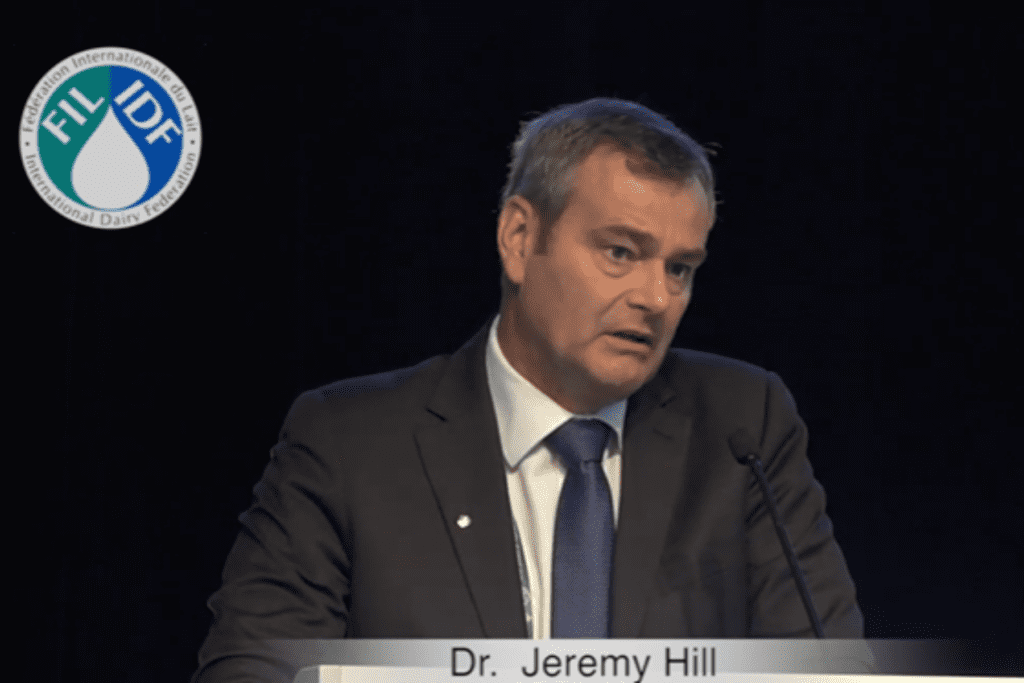
Former IDF President Dr Jeremy Hill appointed Member of the New Zealand Order of Merit
IDF were delighted to receive the news this week that our former IDF President, Dr Jeremy Hill, Fonterra Chief Science and Technology Officer and....